
Home / Communications and Connectivity / Two-Way Radios
Reliable communication is crucial if you want your crew to catch a hazard in time, get a delivery to the right dock, or ensure help arrives before a small problem turns into a costly one.
Ralcomm carries commercial two-way radios from Motorola, Kenwood, Icom, and Hytera, built for the environments where a dropped signal isn’t an option.
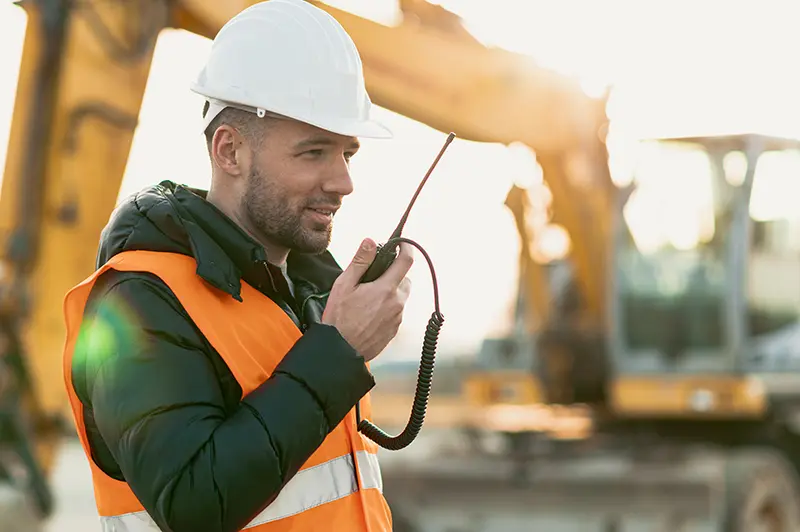
Keeping Western Canada Connected

We ship our radios with full manufacturer support.
Shop by brand:
Motorola offers a wide range of professional and commercial two-way radios designed for reliable communication in the most demanding work environments.
Whether you’re managing a large workforce, coordinating logistics, or watching over a job site, Motorola radios deliver the clarity, durability, and features the work demands.
Featured Models:
As a Kenwood Authorized Dealer, Ralcomm supplies rugged, cost-effective radios for industries where reliability and safety come first, including oil and gas, farming, and forestry.
Featured Models:

Icom’s Land Mobile Radio (LMR) products are built for field operations, from construction sites to emergency response units.
Icom designs for interoperability and instant, secure communication in environments where a delayed message isn’t an option.
Featured Models:

Hytera is a global leader in professional two-way radio communication. Its digital and analog lineup covers construction, oil and gas, public safety, transportation, and event management.
Featured Models:
Not Sure Which Brand is Best?
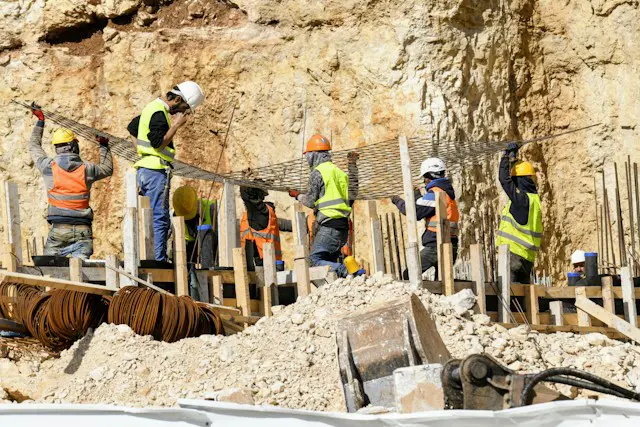
Ranges on a spec sheet and ranges on a job site rarely match. Terrain, buildings, and elevation all cut into how far a signal actually travels.
A radio that promises kilometres of range in open country can lose half that distance behind a single ridge or a warehouse wall.
For crews working across large or uneven sites, a repeater system or a wide-area network closes that gap far more reliably than a stronger handheld alone.
For outdoor and extreme-condition work, from oil field sites to forestry cutblocks, our rugged radio lineup is built to survive the drops, dust, and moisture that would take a standard radio out of service.

Not every two-way radio in Canada needs a licence, but many commercial use cases do, and the rules depend on technicalities like frequency band and power output.
A basic, license-exempt radio might cover a family radio service, while a multi-site operation coordinating across departments usually needs a licensed frequency to avoid interference with other users.
Tell us what the radio is for, and we’ll help you figure out what’s required!
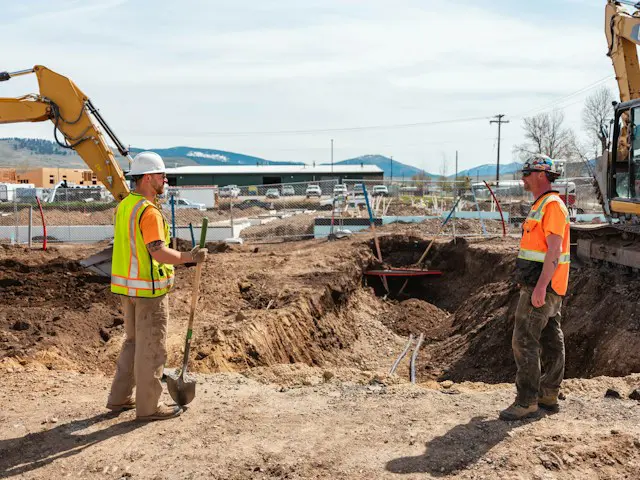
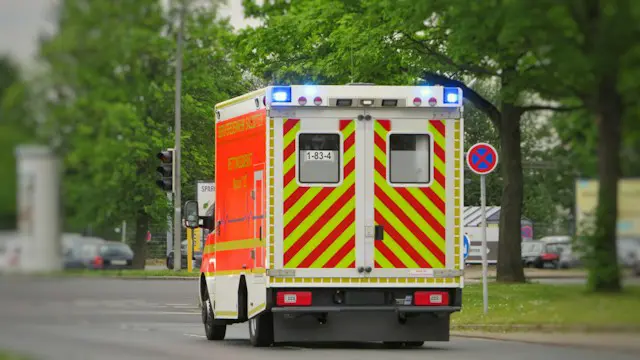
The Alberta First Responders Radio Communications System, or AFRRCS, is a two-way radio network for first responders across municipal, provincial, and First Nations agencies in Alberta. AFRRCS went live in July 2016, and it lets agencies share talk groups, enabling them to coordinate across departments in ways that weren’t possible before.
Public safety agencies using AFRRCS include first responders such as police, fire, and ambulance services, as well as secondary responders such as public works and public transit.
In addition to supplying equipment, Ralcomm employs two Technical Assistants to support the AFRRCS.
Managing devices on a trunked digital radio network is complex. A technical assistant or technical administration service handles the daily operational tasks for an agency’s radios:
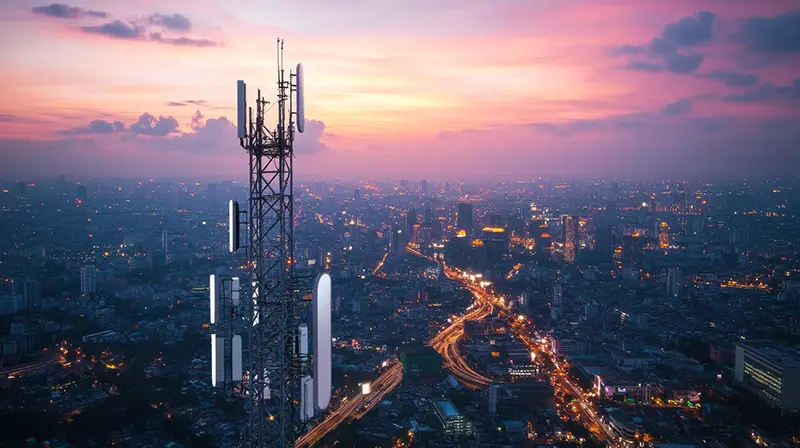
For operations that outgrow simple radio-to-radio communication, Ralcomm specializes in Motorola MOTOTRBO digital systems that scale to meet your coverage and capacity needs:
Not every job needs you to own a radio fleet outright.
Ralcomm rents two-way radios for shutdowns, events, and short-term projects, so you get the right equipment without carrying it on the books once the job wraps.
Curious about rental terms, minimum periods, or pricing?
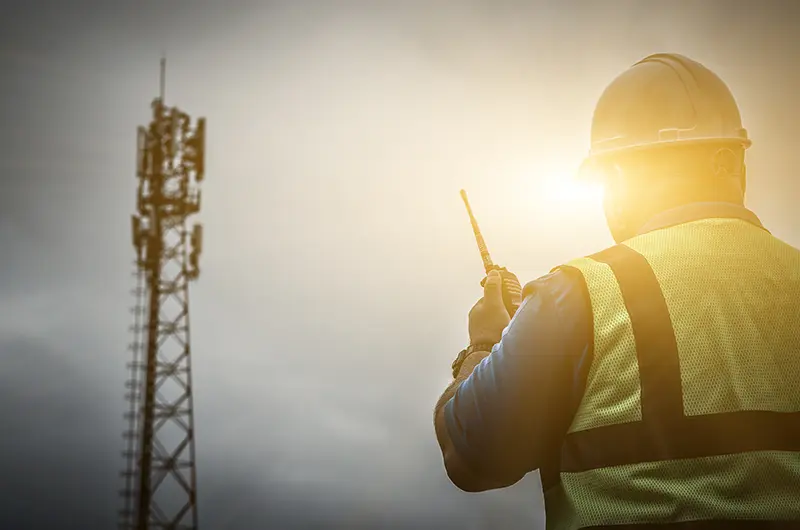
According to Innovation, Science and Economic Development Canada (ISED), anyone who intends to use radio frequencies for radiocommunications must hold a legal licence to operate in Canada. This rule applies to both individuals and organizations. However, exemptions apply.
Ralcomm can support licensing requests for a fee.
Tell us what you’re using the radio for, and we’ll help you figure out what’s required.
Yes! We rent two-way radios, so you’re not stuck owning equipment you only need for a few weeks.
Our rental prices vary depending on the equipment, the time needed, and any setup services.
Range depends on terrain, obstacles, and elevation, not just the radio itself.
If your site spans a large or uneven area, a repeater system or a wide-area network usually solves the range problem better than a stronger handheld radio.
Not much in practice. LMR (Land Mobile Radio) is the term more commonly used in North America, and PMR (Private Mobile Radio) is the equivalent term more commonly used in Europe and the UK.
Both describe the same category of two-way radios operated by a private organization rather than a public carrier.
A trunked system automatically shares a pool of radio channels among many users and talk groups, rather than assigning each group its own fixed channel.
This system makes better use of limited channels and reduces busy signals when many people need to talk at once.
